
Does your website need to be ADA compliant? Yes. Here’s why and what it means.
In today’s digital-first world, your website — and especially your home page — is often the first interaction a potential customer has with your business. But what happens when a portion of your audience can’t access or use your website properly?
Furthermore, aside from alienating a portion of your audience there are legal ramifications to not having your site be ADA compliant. The US Department of Justice released specific guidelines for all organizations to be accessible to people with disabilities, which includes your website. Thus, lawsuits, demand letters, and regulatory fines have become commonplace even in the World Wide Web.
Navigating the Americans with Disabilities Act (ADA) can be challenging. However, the bottom line is that it applies to websites as well as physical storefronts.
At Logic Web Media, we work with businesses across Long Island and beyond to build ADA-compliant web design that is not only visually appealing, but also accessible, compliant, and future-proof. ADA compliance isn’t just a technical checkbox—it’s a critical part of modern web design, user experience, SEO, and risk management.
This in-depth guide will explain what ADA compliance is, how it applies to websites, why it matters for your business, and what steps you should take to make your website accessible.
What Is ADA Compliance?
ADA compliance refers to adherence to the Americans with Disabilities Act (ADA), a civil rights law enacted in 1990. The ADA was designed to prevent discrimination against individuals with disabilities and to ensure equal access to public spaces, services, and opportunities.
While the ADA was originally written with physical spaces in mind—such as buildings, transportation, and workplaces—it has since been interpreted by courts and regulators to apply to digital spaces, including websites and mobile applications.
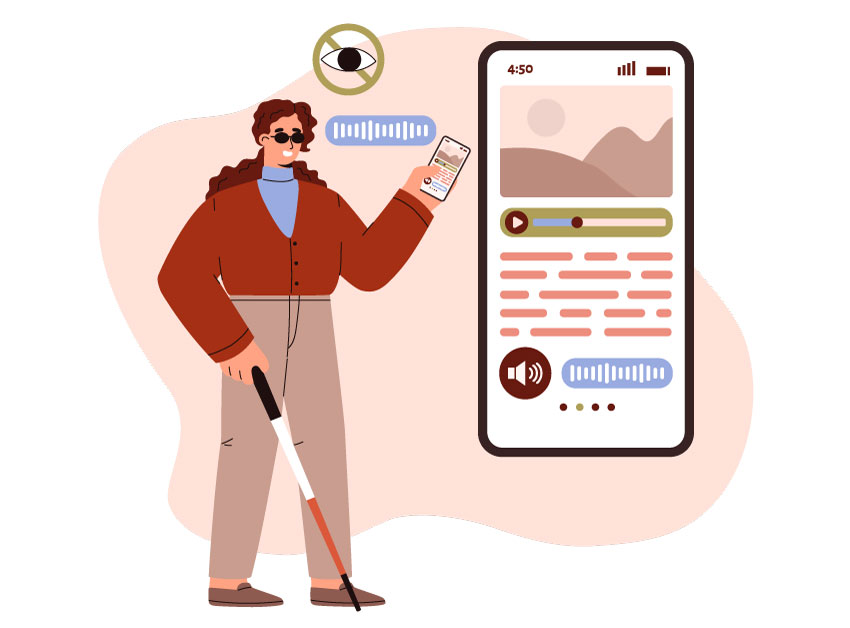
In simple terms, ADA-compliant websites are designed so that people with disabilities can perceive, understand, navigate, and interact with online content effectively.
Disabilities Covered Under the ADA
ADA compliance focuses on accessibility for people with a wide range of disabilities, including:
- Visual impairments (blindness, low vision, color blindness)
- Hearing impairments (deafness or hard of hearing)
- Motor disabilities (limited use of hands, difficulty using a mouse)
- Cognitive disabilities (learning disabilities, ADHD, dyslexia)
- Neurological conditions (seizure disorders, autism spectrum disorders)
An accessible website ensures that users with these challenges can still browse, read, interact, and convert—just like any other visitor.
How Does ADA Apply to Websites?
The ADA itself does not contain explicit technical standards for websites. However, U.S. courts and the Department of Justice (DOJ) consistently reference the Web Content Accessibility Guidelines (WCAG) as the accepted benchmark for web accessibility.
What Are WCAG Guidelines?
WCAG is a set of internationally recognized standards developed by the World Wide Web Consortium (W3C). These guidelines outline how to make web content more accessible for people with disabilities.
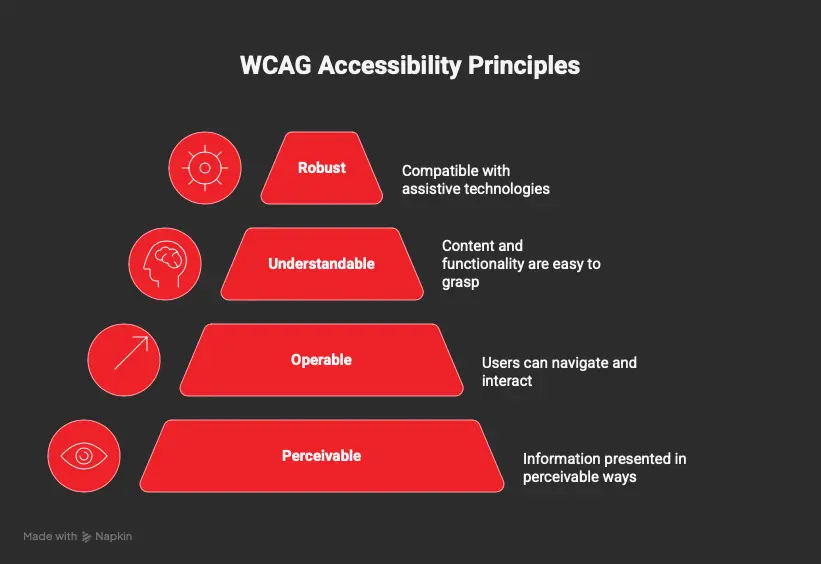
It is built around four core principles, often referred to as POUR:
- Perceivable – Information must be presented in ways users can perceive (e.g., text alternatives for images).
- Operable – Users must be able to navigate and interact with the site (e.g., keyboard navigation).
- Understandable – Content and functionality should be easy to understand.
- Robust – Content must be compatible with assistive technologies, such as screen readers.
WCAG Compliance Levels
WCAG defines three levels of compliance:
- Level A – Basic accessibility features
- Level AA – The most widely accepted standard for legal and practical compliance
- Level AAA – The highest level, often difficult to fully achieve for all content
Most businesses aim for WCAG 2.1 Level AA, which is considered the industry standard for ADA-compliant websites.
Why ADA Compliance Matters for Your Website
ADA compliance isn’t just about avoiding lawsuits—it’s about creating a better, more inclusive web experience while strengthening your brand and digital performance.
1. Legal Protection and Risk Reduction
One of the biggest reasons businesses prioritize ADA compliance is to reduce legal risk.
Website accessibility lawsuits have increased dramatically over the past several years. Businesses of all sizes—from small local companies to major corporations—have faced legal action for having inaccessible websites.
Even if a business never intended to exclude users, lack of accessibility can still be considered discrimination under the ADA.
By proactively addressing accessibility, you:
- Reduce the risk of demand letters and lawsuits
- Avoid costly settlements and legal fees
- Demonstrate good faith efforts toward compliance
2. Expanded Audience and Market Reach
According to the CDC, over 60 million adults in the United States live with some form of disability. That’s a massive audience that often gets overlooked.
An ADA-compliant website allows you to:
- Reach more potential customers
- Serve users who rely on screen readers or assistive tools
- Improve usability for aging populations
Accessibility isn’t niche—it’s inclusive design that benefits everyone.
3. Better User Experience for All Visitors
Many accessibility best practices overlap with general UX and usability improvements.
Examples include:
- Clear navigation
- Readable fonts and proper contrast
- Logical page structure
- Easy-to-click buttons and links
These enhancements make your website easier to use for all users, not just those with disabilities.
4. SEO Benefits of ADA Compliance
At Logic Web Media, we often explain ADA compliance as a hidden SEO advantage.
Search engines and accessibility tools rely on similar signals to understand content.
Accessibility improvements that help SEO include:
- Proper heading structure (H1–H6)
- Alt text for images
- Descriptive link text
- Clean, semantic HTML
- Improved page load and usability
In many cases, improving accessibility also improves crawlability, rankings, and user engagement metrics.
5. Brand Trust and Reputation
An accessible website sends a strong message about your brand values.
It shows that your business:
- Cares about inclusion
- Respects all users
- Is modern and forward-thinking
For many customers, especially younger and socially conscious audiences, this matters.
Common ADA Website Accessibility Issues
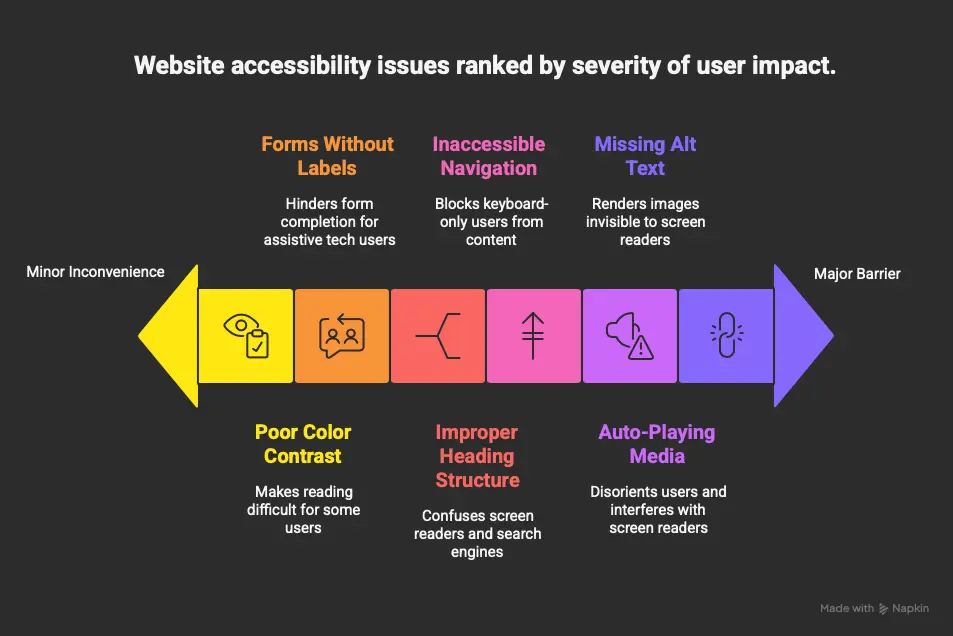
Many websites fail accessibility audits due to preventable issues. Some of the most common include:
Missing or Poor Alt Text
Images without alternative text are invisible to screen readers, leaving visually impaired users without context.
Poor Color Contrast
Low contrast between text and background makes content difficult to read for users with low vision or color blindness.
Inaccessible Navigation
Menus and interactive elements that require a mouse can block users who rely on keyboard navigation.
Improper Heading Structure
Skipping heading levels or using headings purely for styling confuses screen readers and search engines.
Forms Without Labels
Form fields without proper labels make it difficult for users with assistive technologies to complete actions.
Auto-Playing Media
Videos or audio that play automatically can disorient users and interfere with screen readers.
What Makes a Website ADA Compliant?
While every website is different, ADA-compliant websites generally include:
- Text alternatives for non-text content
- Keyboard-accessible navigation
- Clear and consistent layouts
- Readable fonts and sufficient contrast
- Accessible forms and buttons
- Captions or transcripts for video and audio content
- Error identification and clear instructions
A Real-World Example: An Accessibility Widget in Action
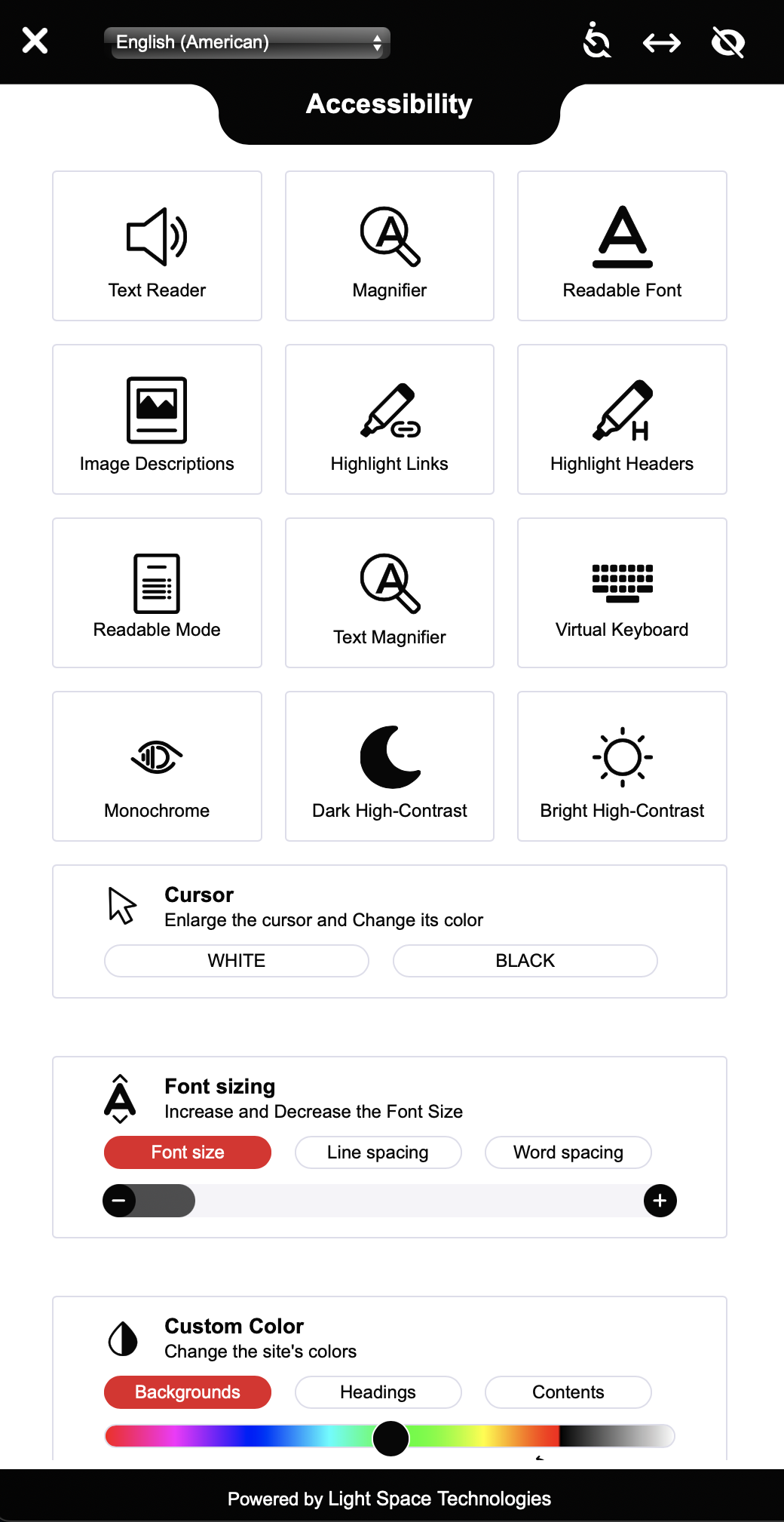
Accessibility should be integrated into design, development, and content updates. One practical tool that helps is an accessibility widget placed on your website, which lets visitors adjust the experience to their own needs—such as increasing text size, boosting color contrast, highlighting links, pausing animations, and enabling screen-reader-friendly modes.
The screenshot shows the accessibility options panel running on our own website. You can try it yourself: click the little blue accessibility icon at the bottom left of this site to see how it works. A widget like this is a helpful layer for visitors, though it works best on top of an accessible foundation rather than as a replacement for one. Real compliance still comes from accessible code, structure, and content underneath.
The Business Types Required to Have ADA Compliant Websites
Is ADA Compliance Required for Every Business Website? This is one of the most common questions we hear.
Generally, these websites include state and local government portals, public-facing private businesses, and organizations or businesses providing goods and services to the public. I know that sounds like pretty much everything, but here is a more specific breakdown.
- Government and Public Sector Websites
- State/Local Gov: Transportation, public health, utilities, and more
- Public Education: School district portals, public universities, digital learning platforms, and more
- Public Services: Libraries, parks, community centers
- Private Businesses and Commercial Websites
- Retail/E-Commerce: Online stores, regardless if you have a storefront or not
- Hospitality and Food: Hotels, restaurants, bars, coffee shops, movie theaters, venues, and more
- Healthcare and Professional Services: Hospitals, medical offices, banks, insurance agencies, lawyers, financial advisors, and more
- Service-Based Businesses: House cleaning, landscaping, plumbers, bookkeeping, home repairs, digital marketing, and more
- Who is Exempt?
- Private clubs
- Religious organizations
- Personal blogs that do not sell anything or offer any service
- Archived government content, such as historical or reference web records
Even if your business believes it may not be legally required, accessibility is still strongly recommended from a business, ethical, and marketing standpoint.
How Logic Web Media Helps With ADA Compliance
At Logic Web Media, we take a proactive, strategic approach to website accessibility, focusing on long-term compliance rather than quick fixes. We begin by conducting thorough accessibility audits based on WCAG guidelines to identify barriers that may prevent users with disabilities from fully engaging with your website. These audits allow us to pinpoint issues that impact usability, accessibility, and overall performance.
Once problem areas are identified, our team implements code-level fixes and structural improvements to ensure your website functions properly with assistive technologies such as screen readers and keyboard navigation. We also apply accessible design best practices, ensuring that layouts, color contrast, typography, and interactive elements are usable and intuitive for all visitors.
For businesses using WordPress or custom content management systems, we provide targeted accessibility enhancements that align with your platform’s architecture while maintaining full client editability. In addition, we offer ongoing compliance support and guidance to help your website remain accessible as content, technology, and standards evolve. Because we specialize in ADA-compliant web design and development, we build accessibility into the foundation of every project—not as an afterthought.
ADA Compliance Is an Investment, Not an Expense
When businesses view ADA compliance purely as a legal requirement, they miss the bigger picture.
An accessible website:
- Reaches more users
- Converts better
- Performs stronger in search
- Protects your business
- Reflects positively on your brand
In today’s competitive digital landscape, accessibility is not optional—it’s part of doing business online.
Final Thoughts…
Why ADA Compliance Matters More Than Ever
ADA compliance is no longer just a trend or a legal talking point. It’s a fundamental aspect of modern web design and digital marketing.
If your website isn’t accessible, you’re potentially excluding customers, harming your SEO performance, and exposing your business to unnecessary risk.
At Logic Web Media, we believe great websites should work for everyone. Whether you’re building a new site or improving an existing one, ADA compliance should be part of the conversation from day one.
If you’re unsure whether your website meets accessibility standards, now is the time to take action. Building on a foundation of ADA-compliant web design makes your online presence stronger—and safer.
ADA Compliance FAQs
Q: What makes a website ADA compliant?
A: A website is considered ADA compliant when it is accessible to users with disabilities and aligns with recognized accessibility standards, most commonly the Web Content Accessibility Guidelines (WCAG) 2.1 Level AA. This includes providing text alternatives for images, ensuring the site can be navigated using a keyboard, maintaining sufficient color contrast, using proper heading structures, and making forms, buttons, and interactive elements accessible to assistive technologies like screen readers. ADA compliance is not about a single feature—it’s about creating an inclusive, usable experience across the entire website.
Q: How can I tell if a website is ADA compliant?
A: There are 3 main ways to check for ADA compliance. First, you can scan it with automated tools like WAVE, Google Lighthouse, or AudioEye. The second way is by using manual testing. This includes testing keyboard navigation by using the Tab key to go forward, Shift + Tab to go backwards, Enter, and Spacebar. Third, you can use a screen reader to check descriptive text links, heading structure, and alt tags.
Q: What happens if my website is not ADA compliant?
A: If your website is not ADA compliant, your business may be exposed to legal risk, including demand letters or lawsuits alleging discrimination against users with disabilities. These claims can result in costly settlements, legal fees, and mandatory remediation timelines. Beyond legal consequences, an inaccessible website can also lead to lost customers, poor user experience, and missed SEO opportunities. Addressing accessibility proactively is almost always less expensive and less stressful than reacting after a complaint is filed.
Q: How much does ADA compliance cost for a website?
A: The cost of ADA compliance varies depending on the size, complexity, and current condition of your website. A small informational site may require minimal updates, while larger websites, e-commerce platforms, or custom functionality may need more extensive audits and remediation. Costs typically include an accessibility audit, code and design fixes, and ongoing monitoring. At Logic Web Media, we view ADA compliance as an investment that improves usability, reduces risk, and strengthens long-term digital performance.
Q: Do personal websites have to be ADA compliant?
A: In most cases, purely personal websites that are not connected to a business, commercial activity, or public accommodation are less likely to be subject to ADA requirements. However, if a personal website is used to sell products, promote services, generate leads, or represent a professional brand, accessibility expectations may still apply. Even when not legally required, making a website accessible is considered a best practice and can improve usability for all visitors.
Q: Who is exempt from ADA website compliance?
A: There is no clearly defined exemption list for ADA website compliance, which is part of what makes accessibility confusing for business owners. While some small businesses or private organizations may believe they are exempt, courts have often ruled that websites connected to places of public accommodation must be accessible, regardless of company size. Because interpretations can vary, many businesses choose to pursue accessibility to reduce risk and demonstrate good-faith compliance.
Q: What do I do if I get a demand letter for my website not being ADA compliant?
A: If you receive a demand letter claiming your website is not ADA compliant, it’s important not to ignore it or panic. The first step is to consult with a qualified legal professional to understand your options. At the same time, having your website evaluated by an experienced web agency can help identify legitimate accessibility issues and begin remediation quickly. Taking prompt action shows good faith and can help reduce potential penalties or legal exposure. At Logic Web Media, we often work alongside business owners to address accessibility concerns and improve compliance moving forward.
About
the Photo
Title: Saturn Family Tour
Date Created: 10/07/2009
Location: Jet Propulsion Laboratory
NASA ID: PIA12258
Image Description (as written on the NASA website):
This image showcases the Saturnian system, beginning with the planet itself and panning out to its newest addition — an enormous ring discovered in infrared light by NASA Spitzer Space Telescope.
See the original here: https://images.nasa.gov/details/PIA12258