If you run a business—whether it’s a plumbing company, a medical clinic, a law firm, or an online store—you’ve probably heard the terms organic traffic and paid traffic thrown around a lot. But what do they really mean for your business? And which one should you focus on to grow your customer base?
It is one of the most common questions business owners ask: “Should we invest in SEO or ads?” This guide breaks down what each channel actually does, what it costs, and when each one makes sense.
The short version is that they solve different problems. Organic traffic is earned over time through SEO services, while paid traffic is bought for immediate visibility through PPC and Google Ads. Most businesses end up using both.
What is Organic Traffic?
Organic traffic is the visitors who come to your website naturally. They find your site through search engines like Google, Bing, or Yahoo, without you paying for clicks. Additionally, they can now find your site through generative engines or AI platforms like Google AI results or ChatGPT.
How Organic Traffic Works for Your Business
When someone searches for a service or product online, search engines show a list of results based on relevance. If your website appears in these results and someone clicks, that’s organic traffic.
Some factors that influence organic traffic include:
- High-quality content: Blog posts, guides, videos, or FAQs that answer customer questions.
- SEO optimization: Keywords, meta descriptions, title tags, and website structure.
- Backlinks: Links from trusted sites in your industry.
- User experience: Fast load times, mobile-friendliness, and easy navigation.
Examples by Industry:
- Home Services: A blog on “How to Prevent Winter Pipe Bursts” can bring in homeowners looking for plumbing tips.
- Healthcare: A page about “What to Expect During Your First Chiropractic Visit” can attract patients researching care.
- Professional Services: A law firm blog on “Steps to Handle a Personal Injury Claim” can capture potential clients.
- E-Commerce: An in-depth product guide or buying guide for your products can drive consistent traffic.

What is Paid Traffic?
Paid traffic is exactly what it sounds like—you pay for visitors to come to your site. This includes:
- Google Ads (search or display)
- Social media ads (Facebook, Instagram, LinkedIn)
- Sponsored content
How Paid Traffic Works for Businesses
When you run paid campaigns, you’re essentially bidding for ad space. For example, if a homeowner searches for “emergency plumber near me,” a Google ad from your plumbing company can appear at the top of the results. You pay only when someone clicks—this is called pay-per-click (PPC).
The Two Ways Ads Are Priced
Paid search generally bills one of two ways, and the difference matters for your budget:
- Pay-per-click (PPC): you pay only when someone actually clicks your ad. This is the most common model and the one most small businesses use.
- Cost-per-impression (CPM): you pay each time your ad is displayed, whether or not anyone clicks. Less common for search, but useful for brand awareness campaigns.
How the Ad Auction Actually Works
When someone searches a keyword you are bidding on, Google looks for relevant ads and runs an instant auction. The winner appears at the top of the results page, with runners-up placed above and below the organic listings. Crucially, the highest bid does not automatically win—Google also weighs how relevant your ad and landing page are to the search. A well-targeted ad with a strong landing page can beat a competitor who is simply spending more.
This is why sending ad clicks to a dedicated landing page rather than your homepage matters so much, and it is a big part of why campaign setup makes or breaks your return. There are more options than search ads alone—social, display, shopping, and retargeting each have their place. We covered the full range in our guide to paid internet marketing options.
Other industries can benefit too:
- Healthcare: Ads for flu shots or telehealth services targeting local patients.
- Professional Services: Law firms promoting consultation services.
- E-Commerce: Social ads showing your products to people who match your ideal audience.
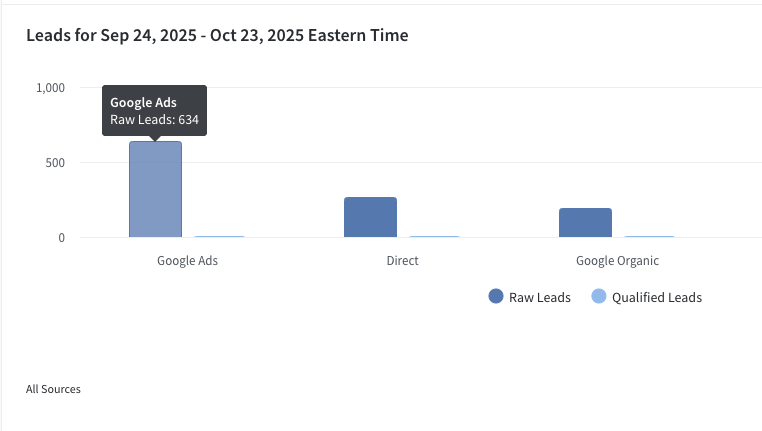
Organic Traffic vs Paid Traffic: The Main Differences
| Feature | Organic Traffic | Paid Traffic |
|---|---|---|
| Cost | Free (requires effort) | Paid (per click or impression) |
| Speed of results | Weeks to months | Immediate |
| Longevity | Long-term | Stops when budget ends |
| Trust | High (users trust search results) | Medium (ads can feel pushy) |
| Strategy | SEO, content marketing, backlinks | PPC, social ads, sponsored content |
Which One Should Your Business Focus On?
The truth? Both. But let’s break it down:
When to Focus on Organic Traffic
- Long-term growth: High rankings keep bringing in leads.
- Build trust: People trust businesses they find through search.
- Resources for content: Blog posts, videos, and guides tailored to your industry.
Industry Examples:
- Home Services: Blog posts like “5 Tips to Prevent Roof Leaks” keep homeowners coming back.
- Healthcare: FAQs about insurance coverage or treatment options increase patient trust.
- Professional Services: “Guide to Business Contracts for Small Businesses” positions your firm as an authority.
- E-Commerce: Product tutorials and buying guides help shoppers trust your products.
When to Focus on Paid Traffic
- Immediate leads: Launching a new service or product? Paid ads fill your calendar fast.
- Targeted reach: Ads focus on the right city, age group, or audience interest.
- Test the market: Paid campaigns show what messaging resonates.
Benefits of Organic Traffic
- Cost-effective: No paying per click; the investment is your time and effort.
- Credibility: High rankings signal authority to potential customers.
- Sustainable: Well-optimized pages bring traffic for years.
- Better ROI over time: Organic traffic often delivers better ROI than ads.
Benefits of Paid Traffic
- Quick results: Ads drive visitors immediately.
- Precise targeting: Show ads to local customers or specific demographics.
- Flexible budget: Start small and scale.
- Trackable performance: Know exactly what’s working with real-time metrics.
Combining Organic and Paid Traffic
- Use paid traffic to test content: Ads show what blogs or landing pages perform best.
- Retarget visitors: Paid campaigns bring back people who visited organically but didn’t convert.
- Dominate search results: Have both your ad and organic listing appear for the same search terms.
How Businesses Can Improve Organic Traffic
- Create high-quality, relevant content for your audience.
- Optimize your website for SEO: Include keywords your potential customers search.
- Build backlinks: Collaborate with trusted local or industry sites.
- Improve user experience: Fast load times, mobile-friendly design, and easy navigation.
- Track and tweak: Use analytics to see what works and adjust.
How Businesses Can Maximize Paid Traffic
- Target the right audience: Homeowners, local patients, or online shoppers.
- Test multiple ad variations: Headlines, images, and calls-to-action.
- Optimize landing pages: Ensure visitors convert after clicking.
- Use retargeting: Bring back visitors who didn’t convert.
- Monitor ROI: Track CPC, CPA, and conversions closely.
Common Mistakes Businesses Make
- Relying only on paid traffic: Once the budget ends, traffic stops.
- Neglecting SEO: Organic traffic builds long-term authority.
- Ignoring analytics: You can’t improve what you don’t track.
- Targeting too broadly: Ads and content must reach the right people.
FAQs
- Can my business succeed with only organic traffic?
- Yes, but it takes time. Paid traffic can help accelerate growth, especially for competitive industries.
- Is paid traffic worth it for small businesses?
- Absolutely. Even a small ad budget can drive local leads for home services, healthcare, or professional services.
- How long until I see results from organic traffic?
- Usually 3–6 months, depending on competition, content quality, and SEO strategy.
- Can paid ads boost organic traffic?
- Indirectly. Ads increase brand awareness, which can lead more people to search for your business organically.
- Should I hire a professional for SEO and paid campaigns?
- Yes. A professional can save time, reduce wasted spend, and get better results faster.
Final Thoughts…
For home services, healthcare, professional services, and e-commerce businesses, balancing organic and paid traffic is key. Organic traffic builds authority and trust over time, while paid traffic delivers instant results and precise targeting.
The right mix depends on your timeline, budget, and how competitive your market is. If you want the organic side handled professionally, our SEO services cover it, and our PPC management handles the paid side.
Pro Tip:
Test, track, and tweak your strategy, and your traffic will start turning into real customers.
About
the Photo
Title: Lieutenant Colonel John Stapp Demonstrates the Rocket Sled
Date Created: 4/1/1945
Location: Lewis Flight Propulsion Laboratory
NASA ID: GRC-1956-C-41773
Image Description (as written on the NASA website):
Howard Hasbrook volunteers for a demonstration of a scaled-down version of Lieutenant Colonel John Stapp’s rocket sled set up in the hangar at the National Advisory Committee for Aeronautics (NACA) Lewis Flight Propulsion Laboratory. In 1945 Stapp, an Air Force medical doctor, volunteered to participate in a deceleration program to study the human body’s tolerance to aircraft crash forces. A 1500-pound sled powered by rockets was installed in 1947 on a section of railroad track in the California desert. Stapp participated in 29 experiments over the next seven years and broke land and deceleration records. These tests studied the effects of acceleration, G-force, deceleration, and wind blast on humans. Stapp suffered broken bones and retinal hemorrhages, but suffered no permanent damage.
See the original here: https://images.nasa.gov/details/GRC-1956-C-41773